How do I choose the right air hose?
▼
It comes down to four things: how far you need to reach, how much air your tools demand, the conditions you work in, and the fittings already on your equipment. Getting these right means steady pressure at the tool, fewer kinks, and a hose that lasts.
What length air hose do I need: 10m, 20m or 30m?
▼
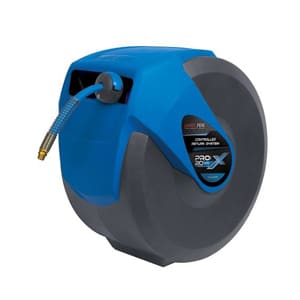
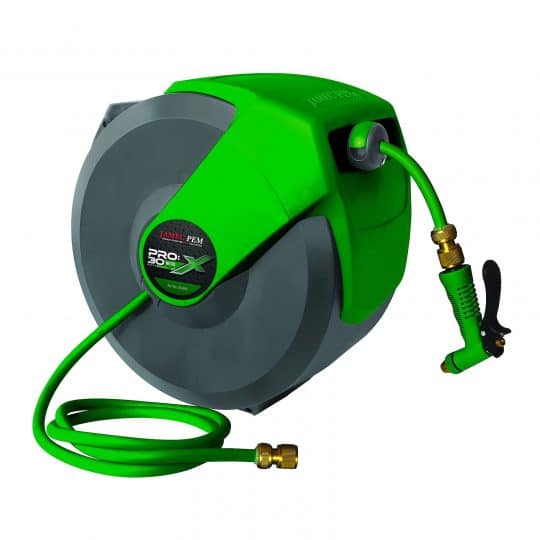
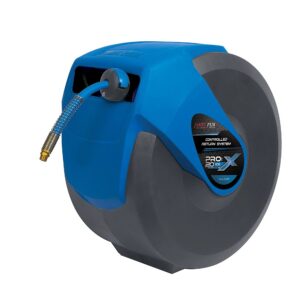
Match the length to your workspace. A 10m hose suits home garages and portable jobs close to the compressor. A 20m hose is the workshop all-rounder for moving around a vehicle or bench. Choose 30m or a retractable reel for larger sheds, sites and detailing bays. Don't buy more length than you need, as longer hoses lose more pressure over distance.
What internal bore (diameter) should my air hose be?
▼
The bore controls air flow. Common sizes are 8mm (5/16"), 10mm (3/8") and 12.5mm (1/2"). A wider bore moves more air with less pressure drop, important for sanders, grinders, and spray guns. For blow guns, tyre inflators and light-duty use, an 8–10mm bore is plenty.
What size air hose do I need for my tools?
▼
Match the bore to the tool's air demand. An 8mm (5/16") hose is fine for nailers, staplers, blow guns and tyre inflators. Step up to 10mm (3/8") for impact wrenches, ratchets and general use. Use 12.5mm (1/2") for high-consumption tools like sanders, grinders, sandblasters and spray guns, or for long hose runs.
Does a longer air hose reduce pressure?
▼
Yes. Air pressure drops over distance, so very long runs can starve high-demand tools. If you need a long hose, step up to a larger internal bore to compensate.
PVC, rubber or hybrid, which air hose material is best?
▼
PVC is light and affordable, but it can stiffen and kink in the cold. Rubber is flexible and hard-wearing and handles cold well, but it's heavier. Hybrid (polymer) hose is the popular middle ground,d lightweight, flexible across temperatures, lies flat and resists kinking, ideal for everyday workshop use.
What is a hybrid air hose?
▼
A hybrid hose uses a polymer blend rather than pure PVC or rubber. It combines the light weight of PVC with the flexibility and cold-weather performance of rubber. It lies flat, resists kinking, has no coil memory, and is easy to drag around the workshop.
What working pressure rating do I need?
▼
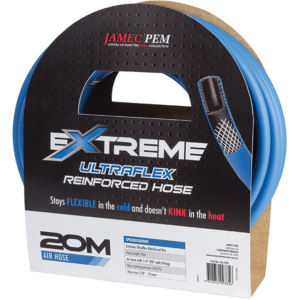
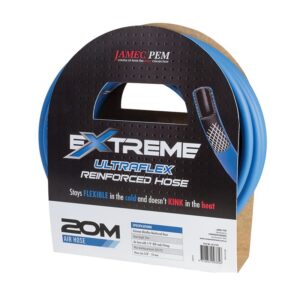
Check working pressure, not just burst pressure. Most air tools run at 90–120 psi, so a hose rated to 300 psi working pressure gives a healthy safety margin. The reinforced Extreme Ultraflex hoses are rated to 300 psi and built for all-weather Australian conditions.
How do I know which air hose fittings are compatible?
▼
Your hose, compressor and tools all need matching couplers. In Australia, Nitto-style one-touch couplers are the common standard, with 1/4" BSP threads on most fittings. Check the coupler/plug type on your existing gear before buying, and standardise on one fitting type across the workshop.
What's the difference between air hose fittings and coupler types?
▼
The coupler (female socket) and plug (male nipple) come in profiles that aren't always cross-compatible. In Australia, the Nitto-style one-touch profile is most common; you'll also see CEJN and automotive/industrial (ARO) types, most threaded to 1/4" BSP. Match the profile across your compressor, hose and tools, or use an adapter.
What is a quick-connect (quick-release) air fitting?
▼
A quick-connect coupler lets you swap tools in seconds with no thread-tapping. Push the plug in to lock, pull the collar back to release. Standardising on one quick-connect profile across your gear saves time and prevents leaks.
What is an air hose used for?
▼
An air hose carries compressed air from a compressor to pneumatic tools and accessories, such as impact wrenches, nail guns, spray guns, sanders, blow guns and tyre inflators.
How should I store an air hose to make it last?
▼
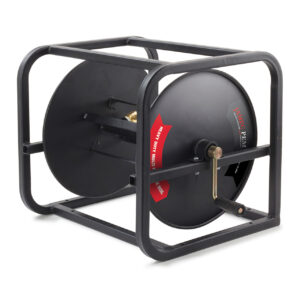
Drain and depressurise after use, coil it loosely or wind it onto a reel, and keep it out of direct sun and away from oils and sharp edges. A retractable reel is the easiest way to avoid kinks, trip hazards and premature wear.
How do I fix a leaking air hose?
▼
For a pinhole or split, cut out the damaged section and rejoin it with a hose mender/repair kit and clamps, or replace the end fitting if the leak is at the coupler. Persistent leaks at connections are usually a worn O-ring or an unsealed thread; replace the O-ring or re-tape the BSP thread with PTFE.